

How to Migrate an OJS Pharmacognosy Journal to a Modern Journal Management Platform
How to Migrate an OJS Pharmacognosy Journal to a Modern Journal Management Platform
Introduction
The scholarly publishing ecosystem has changed dramatically over the past decade. While the Open Journal Systems (OJS) platform has played an important role in democratizing academic publishing and helping thousands of journals establish an online presence, many pharmacognosy and herbal medicine journals are now facing new challenges that require more advanced publishing technologies.
Editors and publishers of pharmacognosy journals increasingly demand:
- Faster manuscript processing
- Better editorial workflow management
- Improved author experience
- Enhanced DOI integration
- Stronger indexing readiness
- Mobile-friendly websites
- Better security and technical support
- Transparent peer review capabilities
- Simplified journal administration
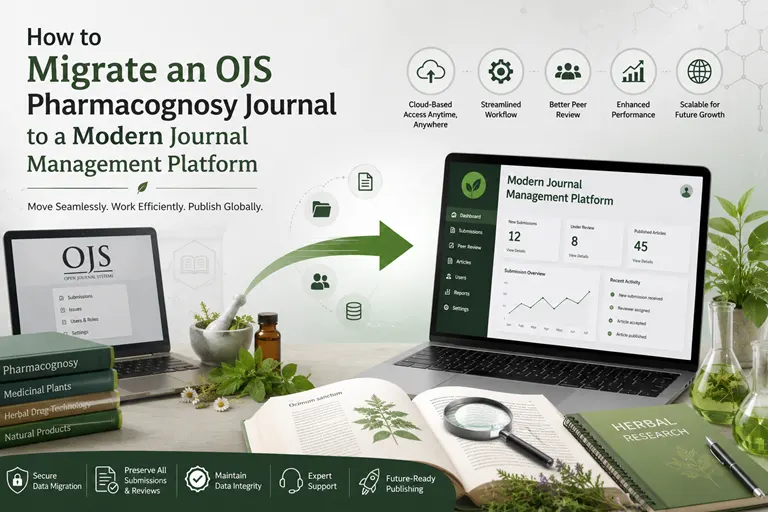
As a result, many journal owners are exploring migration from traditional OJS installations to modern journal management platforms that offer integrated solutions for manuscript submission, peer review, publishing, and journal growth.
This article provides a practical guide for editors, publishers, and scholarly societies that are considering migrating their pharmacognosy or herbal medicine journals to a modern journal management system.
Why Pharmacognosy Journals Are Moving Beyond Traditional OJS
OJS remains a respected open-source publishing platform and continues to serve many journals effectively. However, the expectations of authors, reviewers, and indexing agencies have evolved significantly.
Modern scholarly journals require:
- Responsive and professional website design
- Automated editorial workflows
- Advanced reporting and analytics
- Better user experience
- Easier DOI management
- Integration with modern publishing tools
- Simplified issue publishing
- Reduced technical maintenance requirements
Many small and medium-sized journals struggle with:
- Server management
- Plugin compatibility issues
- Software upgrades
- Security vulnerabilities
- Technical support limitations
- Manual editorial processes
These challenges often consume valuable editorial time that could otherwise be invested in improving journal quality and attracting better submissions.
Unique Challenges Faced by Pharmacognosy and Herbal Drug Journals
Pharmacognosy journals frequently manage manuscripts involving:
- Phytochemical studies
- Medicinal plant research
- Herbal drug standardization
- Natural product chemistry
- Clinical herbal medicine studies
- Ethnopharmacology
- Pharmaceutical biotechnology
- Interdisciplinary research collaborations
Such journals usually require:
- Multiple file uploads
- Large supplementary datasets
- Complex reviewer assignments
- Detailed metadata management
- DOI registration support
- Long-term archiving and indexing preparation
A modern publishing platform can significantly simplify these requirements.
Signs That Your Journal Has Outgrown OJS
Slow Editorial Workflow
If manuscript handling takes weeks due to manual processes, your journal may need workflow automation.
Frequent Technical Problems
Constant plugin issues, failed updates, and security concerns indicate that the platform requires significant maintenance.
Poor Author Experience
Today's authors expect intuitive submission systems and real-time manuscript tracking.
Difficulty Managing DOIs
Crossref metadata management can become increasingly complex when workflows remain fragmented.
Limited Publishing Analytics
Editors need access to data that supports strategic decisions and journal growth.
Mobile Usability Issues
Many authors and reviewers now access journal websites using mobile devices.
Benefits of Migrating to a Modern Journal Management Platform
Improved Manuscript Submission System
Modern platforms provide:
- User-friendly submission interfaces
- Automated notifications
- Better communication tools
- Faster editorial handling
Streamlined Peer Review
Editors can efficiently manage:
- Reviewer invitations
- Reviewer reminders
- Decision workflows
- Editorial tracking
Better Journal Presentation
A modern website improves:
- Author confidence
- Journal credibility
- Reader engagement
- Indexing readiness
Enhanced Security
Modern platforms usually provide:
- Regular maintenance
- Automated backups
- Security monitoring
- Technical support
Better Research Visibility
Improved metadata management supports:
- Search engine visibility
- Citation discovery
- DOI integration
- Long-term accessibility
Why Many Emerging Journals Are Choosing ScholarJMS
Modern publishing platforms such as ScholarJMS have been designed specifically to address the evolving needs of scholarly journals.
ScholarJMS offers:
- Journal website development
- Manuscript submission management
- Editorial workflow automation
- Article publishing tools
- Reviewer management
- DOI-ready workflows
- Responsive design
- Journal analytics and reporting
For pharmacognosy and herbal medicine journals, these capabilities can substantially reduce administrative workload while improving publication quality and author satisfaction.
Step-by-Step Guide to Migrating an OJS Pharmacognosy Journal
Step 1: Conduct a Complete Journal Audit
Before migration, evaluate:
- Current website structure
- Published issues
- Manuscript records
- User accounts
- DOI metadata
- Indexing information
- Plugins and integrations
A detailed audit minimizes migration risks.
Step 2: Define Your Migration Goals
Identify why your journal wants to migrate.
Common objectives include:
- Better workflow management
- Website redesign
- Improved author experience
- DOI integration
- Enhanced indexing readiness
- Reduced technical maintenance
Clear objectives help determine the right platform.
Step 3: Backup Everything
Always create backups of:
- Database
- Website files
- Article PDFs
- Images
- Metadata
- DOI records
- User information
Data protection is one of the most important aspects of journal migration.
Step 4: Plan Metadata Migration
Journal metadata includes:
- Article titles
- Author information
- Abstracts
- Keywords
- References
- Issue information
- DOI details
Accurate metadata migration preserves journal discoverability.
Step 5: Redesign the Journal Website
Migration provides an opportunity to improve:
- Website appearance
- User experience
- Navigation
- Mobile responsiveness
- Branding
- Submission workflows
A modern journal website significantly improves credibility among researchers.
Step 6: Test the New System
Before launch, verify:
- Submission forms
- Editorial workflows
- DOI links
- Published articles
- Search functionality
- User accounts
- Email notifications
Thorough testing prevents post-launch problems.
Step 7: Train Editors and Staff
Migration should include training on:
- Editorial workflows
- Reviewer management
- Publishing procedures
- Website administration
- Metadata management
Proper training ensures successful adoption.
Common Mistakes During Journal Migration
Ignoring Metadata Quality
Poor metadata migration can negatively affect indexing and citations.
Losing DOI Information
DOI records should always be carefully preserved.
Inadequate Testing
Launching without testing often creates avoidable problems.
Poor Communication
Authors and reviewers should be informed about system changes.
Migrating Without Expert Support
Journal migration can become technically challenging, particularly for journals with large archives.
The Importance of ISSN and Journal Readiness During Migration
Migration often provides an opportunity to review:
- ISSN records
- Publication policies
- Editorial information
- Website compliance
- Indexing readiness
- Publication ethics documentation
Many journal publishers seek professional guidance during this process.
Platforms and consulting providers such as OJSCloud support journals with:
- Journal launch consulting
- OJS migration assistance
- ISSN consulting
- Website readiness assessment
- Publishing workflow implementation
Crossref DOI Planning Should Be Part of Every Migration Project
DOIs are now an essential component of scholarly publishing.
Migration projects should review:
- DOI registration workflows
- Metadata quality
- Citation linking
- Crossref deposits
- Persistent identifier management
Services such as GetDOI help journals establish efficient DOI workflows and improve metadata management practices.
CTA: Need Help Migrating Your Journal?
Whether you are planning to modernize an existing pharmacognosy journal or launch a new herbal medicine publication, professional guidance can significantly simplify the process.
We can help with:
- ScholarJMS journal website setup
- OJS to ScholarJMS migration
- ISSN consulting
- Crossref DOI support
- Editorial workflow setup
- Journal launch consulting
- Publishing technology implementation
WhatsApp: +91 82003 85143
Email: inquiry@ojscloud.com
Transparent Peer Review and the Future of Journal Publishing
The future of scholarly publishing is moving toward:
- Greater transparency
- Better research integrity
- Improved peer review processes
- Enhanced trust in scholarly communication
Platforms such as Scholar9 are supporting this transition by promoting transparent peer review and research trust initiatives.
For pharmacognosy journals seeking long-term growth and international visibility, adopting modern publishing technologies can provide a significant competitive advantage.
How Migration Can Improve Journal Growth
Successful migration often leads to:
- Better author experience
- Increased manuscript submissions
- Improved editorial efficiency
- Enhanced journal credibility
- Better indexing preparedness
- Stronger international visibility
Modern technology allows editors to focus more on academic quality and less on technical administration.
Frequently Asked Questions
Is OJS still a good platform for journals?
Yes. OJS remains an important publishing platform. However, many journals choose modern alternatives when they require additional automation, support, and integrated workflow capabilities.
How long does journal migration usually take?
Migration timelines depend on archive size, metadata complexity, and customization requirements.
Can existing DOIs be retained after migration?
Yes. DOI information can usually be preserved when migration is carefully planned.
Will published articles remain accessible?
Yes. Proper migration ensures continued access to previously published content.
Should journals seek professional migration support?
For journals with large archives or complex workflows, expert guidance can significantly reduce risks and improve outcomes.
CTA: Planning to Upgrade Your Pharmacognosy Journal?
If your journal is experiencing workflow challenges, technical limitations, or growth constraints, now may be the ideal time to consider modernization.
Our team can assist with:
- New journal website development
- OJS migration
- ISSN consulting
- Crossref DOI support
- Editorial workflow setup
- Publishing strategy consultation
WhatsApp: +91 82003 85143
Email: inquiry@ojscloud.com
Conclusion
The field of pharmacognosy and herbal medicine research is growing rapidly, and scholarly journals in this domain must adopt technologies that support efficient publishing, better author experiences, and long-term sustainability.
Migrating an OJS pharmacognosy journal to a modern journal management platform is not merely a technical upgrade. It is a strategic investment in journal quality, operational efficiency, and future growth.
By implementing modern editorial workflows, improving DOI management, strengthening website usability, and embracing transparent publishing practices, pharmacognosy journals can position themselves for greater visibility and scholarly impact in the years ahead.