

Anti-Inflammatory Activity of Herbal Extract Using Albumin Denaturation Method

Published in IJPHDT, Vol-3, Issue-05, June-August: 2026 (Vol. 3, Issue 5, 2026)
Keywords
Abstract
References
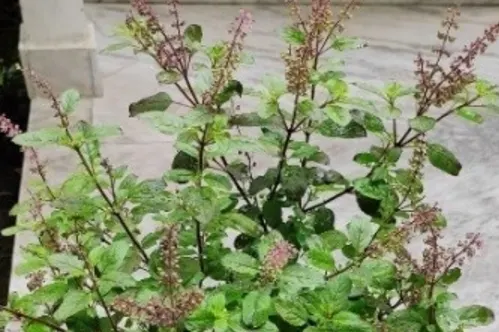
- [1]-Incubate at 37ºC for 20 minutes . Tulsi extract also demonstrated moderate inhibition of albumin denaturation, with a maximum inhibition of 52.75%. The anti-inflammatory effect of tulsi may be due to phytoconstituents such as eugenol, rosmarinic acid, ursolic acid, and flavonoids, which possess antioxidant and anti-inflammatory activities.
- [2]Pipetting should be done carefully to avoid volume errors.
- [3]Air bubbles should be avoided while filling cuvettes. Abdelhamid H. Elgazzar and Magda Elmonayeri. (Inflammation) Mizushima, Y., & Kobayashi, M. (1968). Interaction of anti-inflammatory drugs with serum proteins, especially with some biologically active proteins. Journal of Pharmacy and Pharmacology. Medzhitov R. Inflammation 2010: new adventures of an old flame. Cell. 2010;140:771–776. Nathan C, Ding A. Nonresolving inflammation. Cell. 2010;140(6):871–882. Abdulkhaleq LA et al. The crucial roles of inflammatory mediators in inflammation. Vet World. 2018;11(5):627–635. Mizushima, Y., & Kobayashi, M. (1968). Interaction of anti-inflammatory drugs with serum proteins, especially with some biologically active proteins. Journal of Pharmacy and Pharmacology, 20(3), 169–173. Vane, J. R., & Botting, R. M. (1998). Anti-inflammatory drugs and their mechanism of action. Inflammation Research, 47(2), 78–87. Sakat, S., Juvekar, A. R., & Gambhire, M. N. (2010). In vitro antioxidant and anti-inflammatory activity of methanol extract of Oxalis corniculata Linn. International Journal of Pharmacy and Pharmaceutical Sciences, 2(1), 146–155. Sakat, S., Juvekar, A. R., & Gambhire, M. N. (2010). In vitro antioxidant and anti-inflammatory activity of methanol extract of Oxalis corniculata Linn. International Journal of Pharmacy and Pharmaceutical Sciences, 2(1), 146–155. Rasu R., Blessina S., & Sangeetha N. (2025). Comparative Profiling of Phytochemical and Nutritional Constituents in Neem, Gooseberry and Tulsi Leaves. International Journal of Current Microbiology and Applied Sciences, 14(11), 12–19. Kela E, Sogbesan AO, Wakil UB. Evaluation of Phytochemical Composition of Ginger Extracts. Fisheries and aquaculture journal. 2021 Dec 30;12(7) Sherly E.A., Prabhat Kumar, Pawan Kumar, Tripathi A., Sengar P., & Tiwari S. (2023). Role of Five Medicinal Plants (Giloy/Guduchi, Garlic, Tulsi, Turmeric and Ginger) in Human Immune System. International Journal of Innovative Science and Research Technology, 8(2). Chandra, S., & Chatterjee, P. (2012). Evaluation of anti-inflammatory effect of ashwagandha: A preliminary study in vitro. Pharmacognosy Journal, 4(29), 47–49. Popuri, A. K., & Pagala, B. (2013). Extraction of curcumin from turmeric roots. International Journal of Innovative Research and Studies, 2(5), 290–299. Rajesh Kumar Nema ,S.N meyanathan Chandra Shekhar , Mahesh Verma , C.S Bhan , “A practical approach to Pharmaceutical Analysis” CBS Publishers and distributer Pvt. Ltd , First edition – 2008 , Reprint -2011 page no. 1-3 .
Authors (4)
Majid Shabbir Khan
Pharmaceutical Chemistry Depar...Pharmaceutical Chemistry Department, Dr. J. D. Paw...Pharmaceutical Chemistry Department, Dr. J. D. Pawar College of Pharma...Pharmaceutical Chemistry Department, Dr. J. D. Pawar College of Pharmacy, Manure, Kalwan, Nashik, Ma...
View all publications →Pankaj Rangnath Bharsat
Pharmaceutical Chemistry Depar...Pharmaceutical Chemistry Department, Dr. J. D. Paw...Pharmaceutical Chemistry Department, Dr. J. D. Pawar College of Pharma...Pharmaceutical Chemistry Department, Dr. J. D. Pawar College of Pharmacy, Manure, Kalwan, Nashik, Ma...
View all publications →Pari Sanjay Bhavsar
Pharmaceutical Chemistry Depar...Pharmaceutical Chemistry Department, Dr. J. D. Paw...Pharmaceutical Chemistry Department, Dr. J. D. Pawar College of Pharma...Pharmaceutical Chemistry Department, Dr. J. D. Pawar College of Pharmacy, Manure, Kalwan, Nashik, Ma...
View all publications →Mohan Balasaheb Bute
Pharmaceutical Chemistry Depar...Pharmaceutical Chemistry Department, Dr. J. D. Paw...Pharmaceutical Chemistry Department, Dr. J. D. Pawar College of Pharma...Pharmaceutical Chemistry Department, Dr. J. D. Pawar College of Pharmacy, Manure, Kalwan, Nashik, Ma...
View all publications →Download Article
Summarise this paper with AI:
Article Information
Article Impact
Smart Citations
scite shows how a scientific paper has been cited by providing the context of the citation, a classification describing whether it supports, mentions, or contrasts the cited claim, and a label indicating in which section the citation was made.

How to Cite
Shabbir Khan, M., Rangnath Bharsat, P., Sanjay Bhavsar, P., & Balasaheb Bute, M. (2026). Anti-Inflammatory Activity of Herbal Extract Using Albumin Denaturation Method. International Journal of Pharmacognosy and Herbal Drug Technology, 3(5), 102-127. https://doi.org/10.64063/3049-1630.vol3.issue5.000246